
First Time I Let Copilot Touch My Data
And the regex grrl lives to tell about it

I remember the moment clearly because it was so ordinary.
Someone pasted a table into a Teams chat. Hundreds of lines of text. Columns that almost lined up. Almost.
I asked, politely, if they could send it as a CSV or an Excel file. Whatever format was easiest. I knew what was coming next otherwise.
They did not respond.
A little while later, they followed up with a different question. Did I have an answer yet?
Under normal circumstances, this is where muscle memory would have taken over. I would copy the data into a text file, start carving it up with regex, and slowly tease a usable dataset out of the mess. I am a regex grrl at heart. This is familiar territory for me. It is satisfying in a very particular way.
But this time, I paused.
This would turn out to be my first GitHub Copilot moment. It did not feel experimental or evaluative. I was not trying to prove anything, either about the tool or about myself. I was simply curious. I wanted to see what it could do, whether it could handle this kind of mess, and what I would need to do differently to make it work. It felt less like trying a new product and more like testing a possibility.
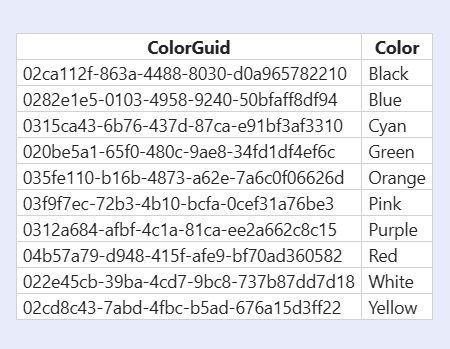
I still copied the data into a text file. Some habits run deep. Instead of reaching for my usual toolkit, I decided to try something new. I asked GitHub Copilot what it could make of it.
Specifically, I asked it to generate a datatable from the text.
What happened next was quiet, fast, and a little disorienting.
In short order, I had a clean datatable. The columns were where I needed them to be. The one field I cared about was ready to join against my existing dataset. No trial and error. No remembering the exact regex incantation. No scrolling back and forth wondering if I had broken row 237.
It just worked.
I had been braced for at least some resistance. A partial solution. A follow up prompt. A few rounds of adjustment. When none of that showed up, I was left with an unfamiliar feeling of ease.
What struck me was not that Copilot did something I could not do. I have done versions of this many times before.
What struck me was the absence of friction.
There was no cognitive warm up. No context switching into a different mental mode. I did not have to remember syntax I use infrequently but pride myself on knowing. I stayed focused on the problem I was actually trying to solve, not the mechanics of cleaning the data.
That was the moment I realized this was not about automation replacing skill. It was about releasing myself from needing to perform the skill every single time.
I won’t stop being a regex grrl. I just learned that I did not always have to prove it.
Since then, I have noticed how often my default workflows are shaped by identity as much as necessity. The tools we reach for are often the ones that remind us who we think we are good at being. Letting Copilot help with the unglamorous parts felt like letting go of a small badge I had been carrying around for years.
It turns out, I did not need it.
I got my answer faster. The other person got what they needed. And I was left thinking about a new kind of collaboration.
Not a replacement for how I know how to work.
Just another way to keep moving.