
Learning to Stop Keeping Watch

Author’s Note: I’m writing this as I’m watching over someone who is struggling and while testing code changes I made this week so they can go live, even though I’m OOF this week. So yea, this test may be accurate.
Jenny had our team take the Positive Intelligence saboteur assessment back in March.
https://positiveintelligence.com/
We talked about it briefly then, but revisited it this week, and for some reason it landed differently this time.
Maybe because I’m leaving Microsoft.
Maybe because my daughters are becoming adults.
Maybe because I am standing in a moment where many of the skills that made me effective for decades are no longer the skills I necessarily want anchoring my life.
Or maybe because I finally had enough distance to stop asking:
“Is this useful?”
and start asking:
“What is this costing me?”
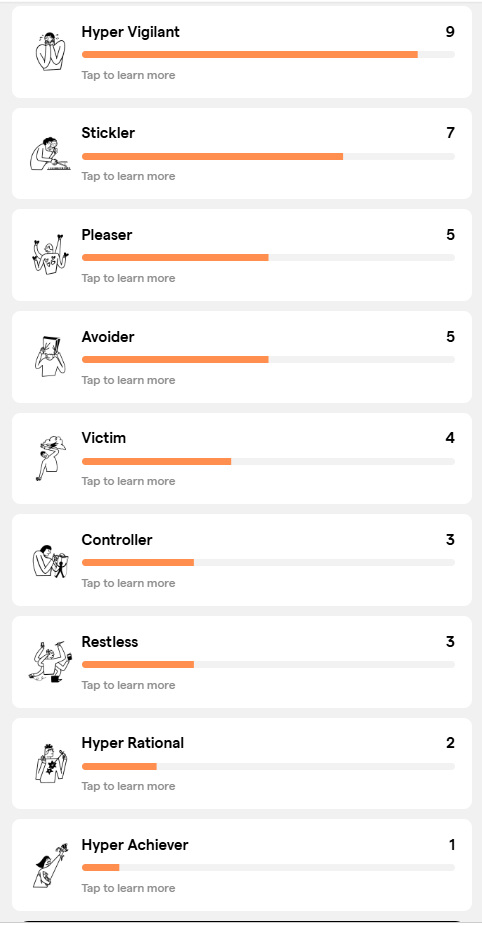
My dominant saboteur score was Hyper Vigilant.
No surprise there.
Not even a little.
I have spent huge portions of my life keeping watch.
I slept on the couch for days after our puppy’s surgery because I needed to make sure she was breathing normally.
I have stayed awake through the night monitoring family members who were sick, struggling, hurting, or simply not safely home yet.
I have spent nights watching data runs and validating production behavior because I needed to know things were correct before anyone else woke up and depended on them.
This week, while preparing code for possible rollout, I tested and retested changes because somewhere deep in my nervous system is the belief that if I stop paying attention, harm can slip through unnoticed.
Professionally, that behavior served me extraordinarily well.
Distributed systems reward vigilance.
Large organizations reward vigilance.
Long-running operational ownership rewards vigilance.
People begin to trust the person who notices things early.
The person who catches risk before impact.
The person who quietly checks one more time.
The person who can be relied upon at uncomfortable hours.
Over time, entire identities can form around that reliability.
And to be clear, I do not think this is fake virtue.
I really do care.
I care whether systems are stable.
I care whether transitions are clean.
I care whether people inherit unnecessary confusion or damage because someone before them stopped paying attention.
I care whether the people I love are safe.
For a long time, I confused that care with responsibility.
Maybe they are related.
But I’m no longer convinced they are the same thing.
One thing that surprised me in the assessment was how low my Hyper Achiever score was.
That seemed wrong at first.
I absolutely care how people perceive me.
I want people to trust me professionally.
I want people to believe I’ll follow through.
I want to be seen as competent and dependable.
But after sitting with it for a while, I realized those are not necessarily achievement motivations.
I do not particularly need to be better than people.
I need people to feel safe relying on me.
That is a different emotional equation entirely.
And honestly, that realization explained a lot.
Much of my career was built around skills that map surprisingly well to Hyper Vigilance:
anticipating failure
spotting edge cases
carrying operational context
preserving continuity
reducing downstream damage
noticing weak signals early
preparing for bad outcomes before they happen
Those are valuable skills.
I do not regret developing them.
But I think I’m finally willing to consider that surviving through vigilance is not the same thing as living well.
That’s the uncomfortable part.
Because vigilance works.
That is what makes it difficult to release.
If hyper vigilance had failed me repeatedly, I would have abandoned it decades ago.
Instead, it made me useful.
Respected.
Trustworthy.
Successful.
It probably prevented genuine harm at various moments in both my personal and professional life.
So now I’m left with the harder question:
What happens when the environment changes, but your nervous system does not?
I am entering a phase of life where relentless monitoring may no longer be required.
Or at least not required at the same level.
I am retiring from a career where institutional memory and anticipatory thinking were deeply rewarded.
My children are becoming adults.
The systems I maintained are being handed to other people.
And I am beginning to realize that some of the behaviors that protected my life are also exhausting it.
That realization feels both obvious and destabilizing.
Because if your identity quietly fused with being “the person who keeps watch,” stepping back can feel irresponsible instead of healthy.
I do not think the answer is:
stop caring.
That does not feel right to me at all.
What I’m wondering now is whether I can learn a different shape of care.
One that includes:
trust
shared responsibility
uncertainty
rest
incompleteness
enoughness
One where vigilance becomes a tool instead of a permanent operating system.
I honestly do not know yet.
But for the first time, I think I’m willing to learn.
Alison + Wiggins