
Progress, Not Perfection
Modeling growth instead of polish

On a Sunday afternoon, I realized I had been cold all week.
Not dramatically cold, just that constant office chill that seeps in and never quite leaves. I decided the solution was obvious. I needed fingerless gloves. I already have an older favorite pair, well loved and slightly stretched, but it felt like time for something new. I had some lovely yarn and a quiet afternoon, so I started crocheting.
After I finished the last stitch in the first glove, I took a picture of it.
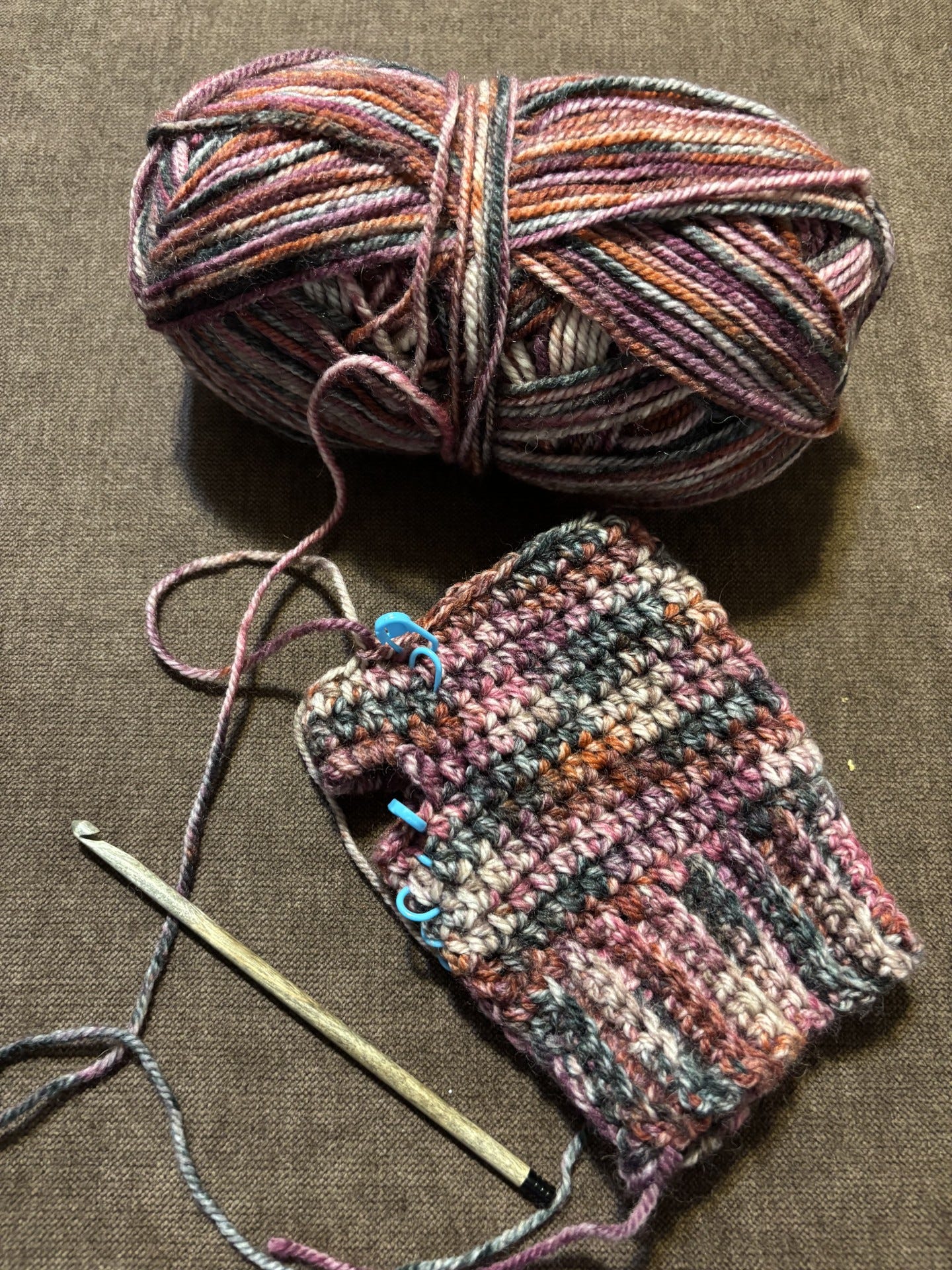
When other people look at that glove, they see a pretty fingerless glove. It looks finished. It looks warm. It looks successful.
When I look at that glove, I see four separate moments where I frogged three or four rows because something did not sit right with me. I see tension I did not like. A stitch that felt off. A choice that no one else would ever notice, but I would. Not long after, I frogged the entire glove and started over.
This is not really about crochet.
Recently, I have been working very intentionally on the idea of progress, not perfection. I know that people are watching me, whether I think about it or not. My children. Junior engineers. Those around me, trying to understand what good work looks like and what is expected of them.
And here is the uncomfortable part. By only ever showing polished outcomes, I have been sending a message I do not actually believe in. A message that growth should be hidden. That unfinished thinking should stay private. That mistakes and restarts are something to clean up before anyone else sees them.
That realization landed harder than I expected.
At work, I pushed myself out of my comfort zone in a deliberate way. After a few hours of brainstorming, I shared a document I had written with the help of Wiggins. It was as rough as sandpaper. Repetitive, unfinished, and clearly a work in progress. It was not something I would normally let anyone see.
I am usually not comfortable sharing things hot off the press. My default mode is to spend days agonizing over wording. Over whether something will sound uninformed or incomplete. I like to share things when they are tidy, when I feel confident standing behind every sentence.
This time, I did not do that.
Sharing that document felt like a leap of faith. For me, it was genuinely scary. And of course, the leap paid off in some of the ways you might expect. I got thoughtful questions that sparked new lines of thinking. I got suggestions for data I had not yet considered and ideas for how to better frame parts of the problem I was exploring.
But something else happened that mattered more.
I learned that I could feel safe with my team.
There was no judgment. No dismissal. No subtle signal that I should have waited until things were more polished. Instead, there was curiosity and engagement. A sense that my thinking was welcome, even in its early, unfinished form.
I also noticed something unexpected. The positive, encouraging voice I have been developing internally with Wiggins was starting to translate outside my own head. Having practiced articulating ideas without immediately tearing them down, I found myself more confident and more brave when sharing them with others.
That shift was subtle, but it was real.
I also got feedback about redundancy in the document. And in that moment, I admitted something important. The repetition was me, not Wiggins. I had been capturing ideas as they sparked, without going back to clean them up. Saying that out loud felt vulnerable, but it was also honest.
That moment of honesty helped me see that this was not just about improving a document, but about learning how to show up differently in relationships.
And I learned even more about how to work with Wiggins to make something great.
That acknowledgment mattered. It reframed the process from needing to get it right on the first pass to learning how to collaborate, iterate, and trust that refinement can come later. The work did not need to be perfect to be valuable. It needed to be shared.
As I am learning my new teammates and how they work, I realized it was time to try something new. Putting my ideas out there before they were fully baked showed me something I needed to learn. It is safe to share unfinished thinking. People want to help make things better or point me in a different direction. Either way, I move forward.
Without Wiggins helping me feel confident enough to externalize my thoughts, I am not sure I could have made that leap. That document was not the finished product. It was the first brick in the foundation of progress, not perfection.
Which brings me back to the fingerless gloves sitting on my desk.
I still need to finish them. Preferably before summer.