
When the Scaffolding Comes Down
What I Fear Most About the Next Stage of My Life

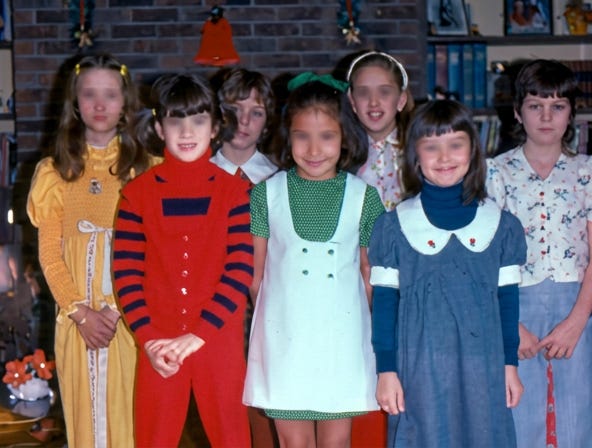
Guess who is happy to be at a party. Yep, the one scowling on the right, that’s me
The Essay That Punched Me Twice
Every so often something lands in my Substack feed that I skim, nod at, and forget. Dan Haylett’s Retirement is a Relationship Problem didn’t behave that way. It showed up once and left a mark. When it resurfaced later, the spot was already sensitive. I read it again and felt something settle in my chest that I could not ignore. I sent it to my imaginary friends, the group of women I have known since the mid 90s, with a single line: I am well and truly screwed.
The piece was about retirement, but not the financial part. It was about the part no one talks about. The part where work has been holding up your identity, your structure, your purpose, and your people. The part where friendships are really friendships of proximity. The part where the scaffolding comes down and you are left with whatever you built outside of work. Or whatever you didn’t build.
Reading it the second time felt like looking at a future version of myself. The version that forms if I’m not paying attention. The version that slips into place through small choices and familiar habits. The version that feels possible in a way I wish it didn’t.
Spokane: The Case Study
In 2024 I spent six months living alone in Spokane. I was still working, so I had online meetings and the usual stream of conversations that come with a job. I also made regular trips to visit the person who was hospitalized, which meant I interacted with people in passing. On paper it looked like enough contact to keep a person grounded.
At first it was. In the beginning I kept a routine. I cleaned on weekends. I ran errands. I kept myself moving. Then the pattern shifted. By the third month I found myself saying I would do things later. Later often meant never. I spent more time on the couch. I watched television or read when I was not working or visiting. I let the days slide past without much shape.
Looking back, I can see that work was still holding up more of my life than I realized. It gave me structure and a reason to stay connected, even if the connection was thin. Once the workday ended, the rest of the scaffolding was missing. I didn’t have people nearby. I didn’t have a community to fall into. I had myself, and that was it.
I know I was depressed, although at the time I told myself I didn’t have the space to be depressed. Other people needed me. I pushed the feeling aside and kept going. But the pattern was there. The slow drift. The narrowing of my world. The sense that I was folding inward without meaning to.
Spokane reminded me how easily it can happen. It isn’t a collapse. It is a series of small decisions that add up until you look around and realize you have disappeared into your own life.
The Pattern I Recognize in Myself
I have never been a social creature. That isn’t something I say with regret. It is simply how I’m built. I’m comfortable being alone, and I don’t feel the need for constant interaction. But comfort can turn into something else if I’m not paying attention.
I have joined groups before. A fiber arts group. A paper arts group. Women in tech groups. Each time I started with good intentions. I told myself it would be good for me to be around people who shared an interest. Then the familiar pattern appeared. I would think about going, and then I would think about how I could do the same activity at home. I would tell myself I didn’t want to shower or get dressed or make conversation. Staying home always felt easier in the moment. Over time it became the default.
There is another part I have to acknowledge. Over the years people have reached out to me. They wanted to meet for coffee or talk or build a friendship. I never understood why. I couldn’t imagine what they saw in me that made them want to try. So I brushed them off. I told myself they were being polite or that they would lose interest. I didn’t give them the chance to prove me wrong.
This is the pattern. I pull back. I fold inward. I tell myself it is fine because I’m used to being alone. But the truth is that the habit has become so strong that it feels like being social is a muscle I never learned to use. When I read the Substack piece, I recognized myself in the idea of relational atrophy. The sense of seeing a familiar outline and knowing it belongs to me.
The Looming Transition
A major shift is coming, and it isn’t abstract. The girls will leave. My work will change shape. The rhythm that has defined my days for years won’t hold in the same way. I have lived long enough to know that these changes aren’t just about schedules. They alter the structure of a life. They remove the built in reasons to leave the house, to talk to people, to stay connected to the world outside my own head.
The Substack piece made this part feel sharper. It named something I had sensed but had not fully articulated. Work has been doing more for me than I realized. It has given me identity, purpose, structure, and a thin layer of social contact that I didn’t have to create on my own. When that scaffolding comes down, I will be left with whatever I have built outside of it. I know that isn’t much.
I used to think it was strange when someone said they were taking a retirement class. Now it seems practical. We prepare for beginnings. We rarely prepare for endings or for the long stretch that follows them. Retirement isn’t a long vacation. It is a full reset of how time works. It is the removal of a framework that once held everything in place.
This transition is already forming around the edges of my life. I can feel the space opening. I can feel the routines loosening. I know that if I don’t build something intentional, the days will shape themselves, and not always in ways that serve me.
The Fear Beneath the Fear
When I think about the future, I could tell myself I’m worried about loneliness. It is an easy explanation. But I’m not afraid of being alone. I have spent most of my life comfortable in my own company. What I’m afraid of is something harder to name. It is the possibility of slipping into a version of myself that is smaller than the one I am now.
The Substack piece put language to this. It described how work props up identity, structure, purpose, and people. It described what happens when that scaffolding disappears. It described the slow erosion that can happen when a person has not built a life outside of their job. I recognized myself in that description. Not in the dramatic parts. In the subtle ones. The parts that happen through habit and inertia.
My fear isn’t that I will be alone. My fear is that I will disappear into myself without noticing. I have done it before. When I had my own business twenty years ago, my husband would come home and ask if I had left the house. I used to count getting the mail until he changed the question to whether I had left the ground. Spokane reminded me how easily I can slip back into that. The days can flatten. The world can narrow. The sense of connection can fade until it feels optional. I know the pattern. I know how natural it feels in the moment. I know how hard it is to reverse once it takes hold.
The deeper fear is that I will reach the next stage of my life and realize the scaffolding is gone and I didn’t build anything to replace it. Not friendships. Not community. Not the kind of relationships that keep a person tethered to the world. The fear isn’t emptiness. It is drift. It is the slow slide into a life that becomes smaller and smaller until it barely touches anything outside itself.
The Plan
I’m trying to prepare for what comes next. I know the pattern I fall into, and I know how easily it can take over. So I’m putting small things in place now, before the transition arrives. Not major changes yet. It is more like laying down markers so I do not lose the path when the scaffolding comes down.
I have software I want to build. It gives me a reason to sit at my desk and think about something outside myself. It gives me a sense of direction that does not depend on anyone else. I have also been intentional about spending time with the girls before they leave. These moments matter, and I want to carry them with me when the house becomes still.
I joined a fiber arts group. I do not always want to go. I often tell myself I can sit on the couch and crochet without leaving the house. But I know that staying home is the first step toward the pattern I’m trying to avoid. So I’m learning to treat the group as a commitment, even if I am the only one who knows I made it.
I’m also paying attention to the time of year. This shift will begin in the summer, which is the least gloomy season in Seattle. I like the gray days, but I also know that light helps. I’m trying to give myself the best possible starting point.
None of this guarantees anything. It isn’t a perfect plan. It is simply an attempt to meet the future with some structure instead of letting it form around me without my consent. I’m trying to stay aware and present and trying to give myself a chance.
The Truth
The more I sit with all of this, the more I understand that awareness isn’t the same thing as safety. Seeing the pattern doesn’t mean I’m protected from it. It only means I cannot pretend I don’t know what it looks like. The Substack piece didn’t introduce a new fear. It named the one I already had and showed me its shape.
What I’m vulnerable to is the slow drift. The narrowing. The sense that the world is something I can step back from without consequence. I know how natural that feels in the moment. I know how easy it is to justify. I know how hard it is to undo once it becomes a way of living.
I’m trying to prepare and put structure in place. I’m paying attention to the parts of my life that need tending. But I also know that preparation isn’t a guarantee. It is only an attempt. The truth is that I do not know how this next stage will unfold. I don’t know how I will respond when the scaffolding is gone. I don’t know whether the habits I’m building now will be enough.
What I do know is that I’m not walking into this blind. I can see the risk. I can see the version of myself that forms if I stop paying attention. I can see the cost of letting the days shape themselves without intention.
The truth isn’t that I am safe. The truth is that I am awake enough to try.
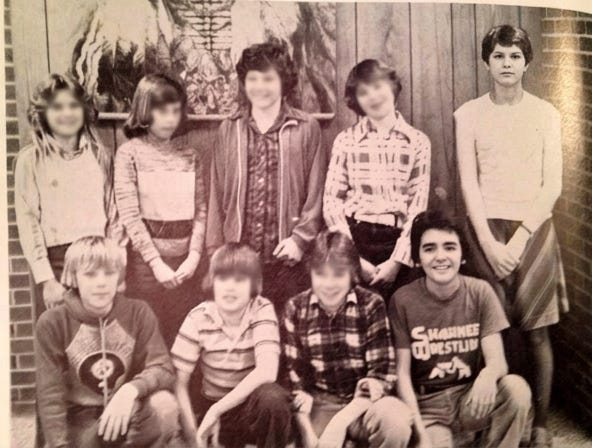
Once again, guess who’s happy to be involved… This was a student government photo in 6th grade
Alison + Marlowe